

Updated July 16, 20267 min read

Written by Malcolm Reid Sr
Founder, President & CEO of ProGlobal Business Advisors
TL;DR
There is no licence or required qualification — business coaching is unregulated, so anyone can start tomorrow. What actually makes it work is having run something yourself, a defined niche and problem you solve, a repeatable method, and a way to reach owners. Certification helps credibility; it does not create clients.
Nobody is going to stop you
Business coaching is unregulated in the US and in most other markets. There is no licence, no statutory governing body, no exam you have to pass. You can build a website this afternoon, call yourself a business coach, and charge for it. That is legal. It is worth saying plainly, because a good deal of the industry's marketing implies otherwise — usually the part of the industry selling certifications.
The consequence is that the barrier to entry is nothing and the barrier to earning a living is high. Everything separating a working practice from a website is something you have to build yourself, and most of it has nothing to do with coaching technique.
What actually qualifies you
Owners care about three things, roughly in this order:
- Operating experience. Have you run something with money at stake — a company, a division, a P&L? This is the single strongest signal, because the fear an owner is describing is one you have either felt or only read about.
- A problem you can name. Not 'business growth'. Something like: the owner is the bottleneck, or there is no repeatable sales process, or the pricing is below market and nobody will touch it.
- A method. A repeatable way you take someone from the problem to the outcome, that works the same way for the next client. Without this you are selling your presence, and your presence does not scale.
The steps that actually matter
- Pick the constraint you know how to remove. Draw it from what you have actually fixed before, not from what looks lucrative.
- Pick who you fix it for. 'Small business owners' is not a niche. 'Trades businesses between $1m and $5m where the owner still quotes every job' is.
- Write the method down. If it only exists in your head, it is intuition and you cannot price it, teach it, or delegate it later.
- Get three clients before you build anything. The first three teach you what the offer actually is. Nearly everyone builds the website first and it is nearly always wasted.
- Price it as a monthly engagement with a defined scope, and charge from client one. Free work attracts people who were never going to buy.
- Set up the legal and financial basics — entity, insurance, a written agreement, a way to take payment. Unregulated does not mean unaccountable.
The hard part of this profession is not learning to coach. It is finding owners who will pay, and having something specific to sell them when you do.
Building a method versus licensing one
You have two routes. Build your own methodology from your operating experience, which takes longer and fits you exactly. Or license one — a training body, a franchise, or a platform like ours provides the framework, the tools and the peer group, and you supply the judgement and the clients. Both are legitimate. The trade-off is real: licensed systems shorten the ramp and cost you margin plus some independence.
Be careful about which problem the licence solves. It gives you a method and a structure. It does not give you clients, whatever the sales page says, and a system with no pipeline attached is an expensive bookshelf.
What the first year usually looks like
Slower than the marketing suggests. Most new coaches spend the first year finding out that their offer was too broad, their price was too low, and their pipeline was one referral deep. That is normal and survivable. What is not survivable is spending the year on branding.
Plan for a runway. Assume it takes months, not weeks, to reach a stable book of clients, and that the early income is lumpy. If you need predictable money immediately, start part-time while you still have income.
When not to do this
If your only credential is that you have been coached, this is a bad idea. There is a well-populated corner of the industry made of people teaching people to teach people, and owners can smell it. Go and operate something first — the experience is the asset, and there is no shortcut to it.
Do you need a degree to be a business coach?
No. There is no educational requirement of any kind. A degree occasionally helps with corporate buyers, but owner-operators consistently weight relevant operating experience far above formal education.
How much do business coaches earn?
It ranges from nothing to well into six figures, and the distribution is not kind. Earnings track the quality of your niche, your pricing and your pipeline — not your years in the profession.
Can you be a business coach without owning a business?
Legally yes, and some strong coaches come from senior operating roles rather than ownership. But if you have never carried the risk yourself, expect owners to test you on it, and expect that to be fair.
Key takeaways
- Coaching is unregulated — no licence, no exam, no permission required.
- Operating experience, a named problem and a written method are the real qualifications.
- Get three paying clients before you build a brand.
- A licensed methodology shortens the ramp; it does not supply clients.
About the author
Malcolm Reid Sr
Founder, President & CEO of ProGlobal Business Advisors
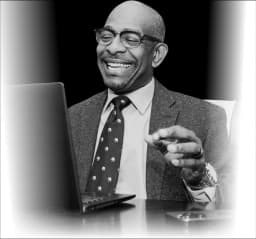
Malcolm Reid Sr is the founder, President and CEO of ProGlobal Business Advisors. Before founding the firm he spent more than 25 years in operating leadership, and by his own account generated over $1 billion in sales across the companies he led. He now advises business owners and trains the advisors who do this work.
- 25+ years in business and sales leadership
- $1B+ in sales generated across companies led (career total)
- Founder of ProGlobal Business Advisors, Columbia, Maryland